Friday, October 18, 2019

How do You Know if Cats Like You?
How do You Know if Cats Like You?
It's normal for your cat to lick you regularly. This is the way a cat expresses love. Every time they lick your hands or other parts, they just want to express their love for you.

The cat will always be around you and rub around. In fact, it does so out of a love for you. If they really don't like you, why should they stay with you and accompany each other? Every time it wants to go out to play, it walks around you, wants you to take it out to play, or it takes you out to play.
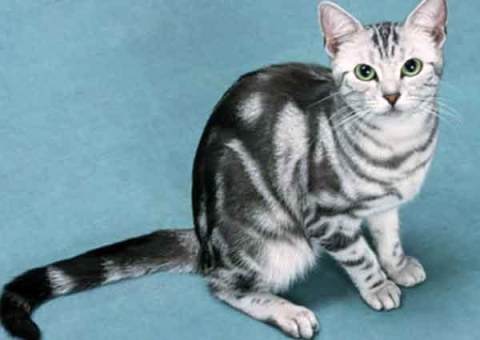
Cats often bark recently. I don't know why. If your cat barks at you regularly recently, it may feel hungry in its stomach. Another possibility is that your cat hasn't seen you for a long time. It misses you very much.

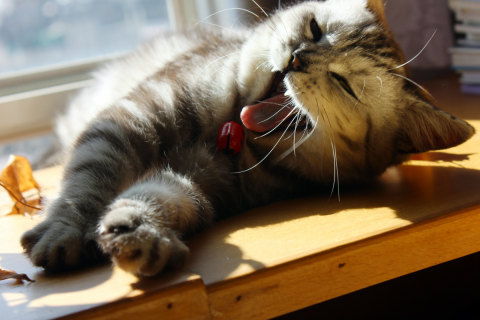
Many cats behave in a daze. Most of the time, it would lie on the windowsill and look out, like sunshine, as well as the scenery outside. In fact, they do this is also a manifestation of love for you, want to know what you are doing, can accompany you around you, observe you. This is also a way for us to express our love.
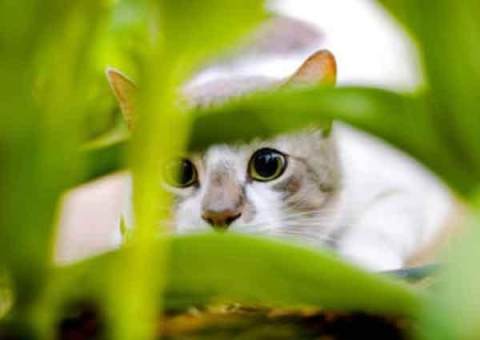
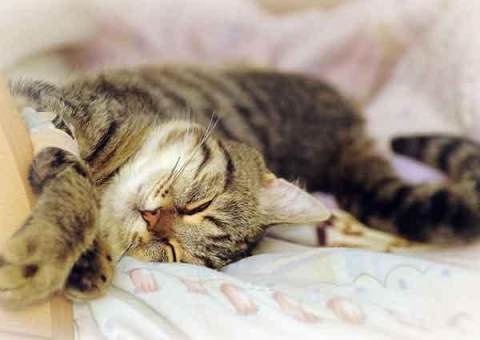
Cats will accompany you when they sleep at night. In fact, cats are insecure pets. They sleep in their own nests when you are not at home. Because there is its own smell in the nest, it will also make the cat have a sense of security. But whenever you go to bed, they will come and sleep beside you. In fact, it is also a sign of your love.

Special Hobby of Humpback

Special Hobby of Humpback

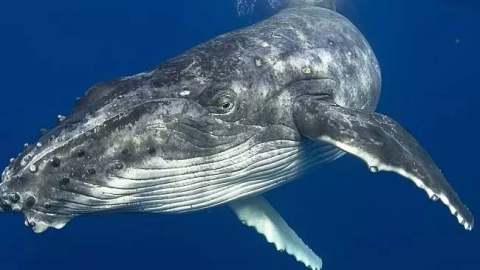
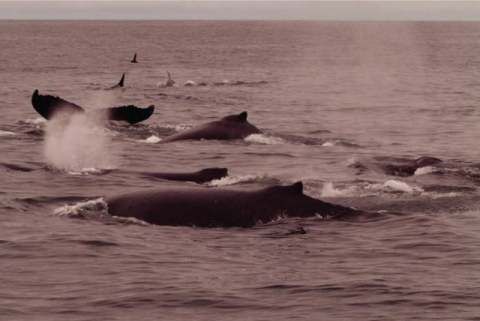
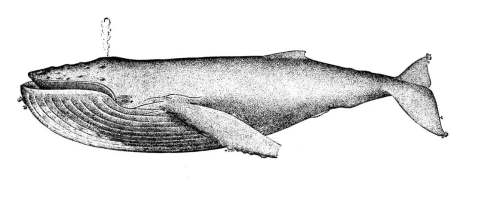
Humpback whales are giants that linger in the vast ocean. Adults can grow up to a dozen meters and weigh nearly 30 tons. Many cases have shown that humpback whales especially like to drive killer whales while they are hunting to rescue the animals being hunted.
What kind of grievances exist between humpback whales and killer whales? Killer whales are a kind of fierce carnivores that often gather together. These hunters can be broadly divided into two categories, one of which mainly preys on fish, while the other mainly preys on marine mammals.
In all cases of humpback intervention, 95% of killer whales attacked mammals. Surprisingly, most conflicts (57%) were initiated by humpback whales. They will even come from a few kilometers away to interfere with the predation of killer whales.
There are indications that humpback whales may rely on keen hearing to discover the predation behavior of killer whales. Once the humpback whale starts the attack, the killer whales start yelling. The humpback whale may have responded by hearing the sound of the killer whale preying.
In the face of killer whales, humpback whales often just wave their pectoral fins and slap their caudal fins; killer whales seem to know the horrible consequences of being hit, so they choose to keep the distance. Therefore, the adult humpback whale is basically invincible when facing the killer whale.

Wednesday, October 16, 2019

Get a dog at home, live longer, healthier life: Study


NewsPoint

Get a dog at home, live longer, healthier life: Study


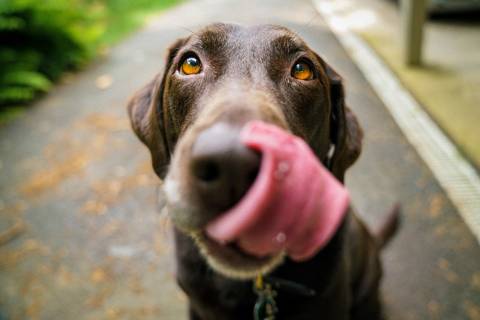
A dog at home means longer life and better cardiovascular health, especially for heart attack and stroke survivors who live alone, according to a new study and a separate meta-analysis on the subject.
Prior studies have shown that dog ownership alleviates social isolation, improves physical activity and even lowers blood pressure.
"The two new studies provide good, quality data indicating dog ownership is associated with reduced cardiac and all-cause mortality," said Glenn N.Levine, Chair of the writing group of the American Heart Association's scientific statement on pet ownership.
image
Researchers in this study compared the health outcomes of dog owners and non-owners after a heart attack or stroke using health data provided by the Swedish National Patient Register.
The patients studied were Swedish residents aged 40-85 who experienced a heart attack or an ischemic stroke from 2001-2012.
Compared to people who did not own a dog, researchers found that for dog owners, the risk of death for heart attack patients living alone after hospitalization was 33 per cent lower, and 15 per cent lower for those living with a partner or child.
The risk of death for stroke patients living alone after hospitalization was 27 per cent lower and 12 per cent lower for those living with a partner or child.
In the study, nearly 182,000 people were recorded to have had a heart attack, with almost 6 per cent being dog owners, and nearly 155,000 people were recorded to have had an ischemic stroke, with almost 5 per cent being dog owners.
The lower risk of death associated with dog ownership could be explained by an increase in physical activity and the decreased depression and loneliness, both of which have been connected to dog ownership in previous studies.
"Keeping a dog is a good motivation for physical activity, which is an important factor in rehabilitation and mental health," said Tove Fall, professor at Uppsala University in Sweden.
In the meta-analysis, researchers reviewed patient data of over 3.8 million people taken from 10 separate studies for a composite meta-analysis study.
Researchers found that compared to non-owners, dog owners experienced a 24 per cent reduced risk of all-cause mortality, 65 per cent reduced risk of mortality after heart attack; and 31 per cent reduced risk of mortality due to cardiovascular-related issues.
"Having a dog was associated with increased physical exercise, lower blood pressure levels and better cholesterol profile in previous reports," said Caroline Kramer, Assistant Professor of Medicine at the University of Toronto.
The findings of the study and meta-analysis were published in Circulation: Cardiovascular Quality and Outcomes, a journal of the American Heart Association.

Little Knowledge Of Dogs

Little Knowledge Of Dogs

Dogs are more sensitive to hearing than humans. They can hear sounds four times the distance of human hearing.
Female dogs are twice as likely to bite as male dogs.
Riveted collars were used in ancient Greece to protect dogs' necks from being bitten by wolves.
The seeds of apples and pears should be kept as far away from dogs as possible, because arsenic in the tissue components of the seeds may cause their death.
The copyright belongs to unsplash.

Study: Dog at Home Means Longer Life, Better Heart Health


NewsPoint

Study: Dog at Home Means Longer Life, Better Heart Health


A dog at home means longer life and better cardiovascular health, especially for heart attack and stroke survivors who live alone, according to a new study and a separate meta-analysis on the subject. Prior studies have shown that dog ownership alleviates social isolation, improves physical activity and even lowers blood pressure.

"The two new studies provide good, quality data indicating dog ownership is associated with reduced cardiac and all-cause mortality," said Glenn N.Levine, Chair of the writing group of the American Heart Association's scientific statement on pet ownership. Researchers in this study compared the health outcomes of dog owners and non-owners after a heart attack or stroke using health data provided by the Swedish National Patient Register.

The patients studied were Swedish residents aged 40-85 who experienced a heart attack or an ischemic stroke from 2001-2012. Compared to people who did not own a dog, researchers found that for dog owners, the risk of death for heart attack patients living alone after hospitalization was 33 per cent lower, and 15 per cent lower for those living with a partner or child.

The risk of death for stroke patients living alone after hospitalization was 27 per cent lower and 12 per cent lower for those living with a partner or child. In the study, nearly 182,000 people were recorded to have had a heart attack, with almost 6 per cent being dog owners, and nearly 155,000 people were recorded to have had an ischemic stroke, with almost 5 per cent being dog owners.
image
The lower risk of death associated with dog ownership could be explained by an increase in physical activity and the decreased depression and loneliness, both of which have been connected to dog ownership in previous studies. "Keeping a dog is a good motivation for physical activity, which is an important factor in rehabilitation and mental health," said Tove Fall, professor at Uppsala University in Sweden.

In the meta-analysis, Researchers reviewed patient data of over 3.8 million people taken from 10 separate studies for a composite meta-analysis study. Researchers found that compared to non-owners, dog owners experienced a 24 per cent reduced risk of all-cause mortality, 65 per cent reduced risk of mortality after heart attack; and 31 per cent reduced risk of mortality due to cardiovascular-related issues.

"Having a dog was associated with increased physical exercise, lower blood pressure levels and better cholesterol profile in previous reports," said Caroline Kramer, Assistant Professor of Medicine at the University of Toronto. The findings of the study and meta-analysis were published in Circulation: Cardiovascular Quality and Outcomes, a journal of the American Heart Association.

Tuesday, October 15, 2019

Here's how to create a private space for your dog

How to create private section for your dog

Here's how to create a private space for your dog


If you are thinking to get your dog its own private space at home - kudos for the idea.
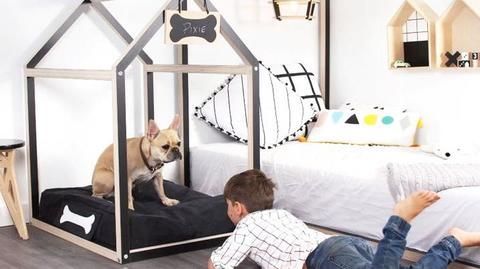
Your pooch deserves its own little abode where it can eat, sleep or play as and when it pleases.
But you need to do it right, otherwise it's a wasted effort.
Here's how you can create a private space for your dog.

Select the space

Select the space
First things first, choose an apt location for your doggy's home.
Select a space that it would like, and where it can rest and play peacefully.
Next, decide on how much space you want to allow your fido. Accordingly, get a bed or a crate or tent.
Also, make sure the space is free from hazards such as cables, so your dog stays safe.

Set up the space

The next step is to set up the space for your dog.
Start by getting a nice and comfortable bed for your pooch.
Also, make sure that fresh, clean water is always available near your doggy's house.
Furthermore, fill up the space with plenty of toys, so that your fido is never bored.
For an added layer of privacy, cover the space.

Introduce your dog to the space

Since your doggy isn't habitual to a separate space, you will have to introduce it to its new home.
Show it the place and let it get comfortable there. However, be patient - this process may take some time.
Gently guide your dog to the space when needed. Or try encouraging them with a treat or two.
Also, make sure you always stay nearby.

How to Raise a Cat?

How to Raise a Cat?
If you are interested in raising a cat, take the time to understand the commitment you are making and learn how to raise it right. If you do this, you are more likely to end up with a well-adjusted, happy, and healthy cat.
Give your cat quality food. When raising a cat it is important to provide it with nutritious food. Canned and dry food are both fine as long as the food includes mostly animal protein and not a lot of filler.
Provide age-appropriate cat food. When your cat is young, you should feed it kitten food, which gives it more fat and protein for its growing mind and body. As the cat ages, you should feed it food that gives it complete nutrition without giving it so much that it gets overweight. When your cat gets older, you may need to transition it onto senior food, which provides the type of nutrition that geriatric cats need.
Give a long-haired cat hairball-preventing cat food. If you have a long-haired cat, it is a good idea to give it hairball-preventing food, especially if it has a history of choking up hairballs. In most cases, this type of food helps to prevent hairballs by increasing the amount of fiber your cat is getting. Fiber increases the rate of digestion and moves food, and hair, through the digestive tract more effectively.
Feed your cat two or three times a day. The amount of food you give it will depend on the size of your cat. Look at the food packaging and follow the directions there for portion sizing, which is usually based on your cat's size and age. Cats who eat too quickly should be fed smaller, more frequent meals.